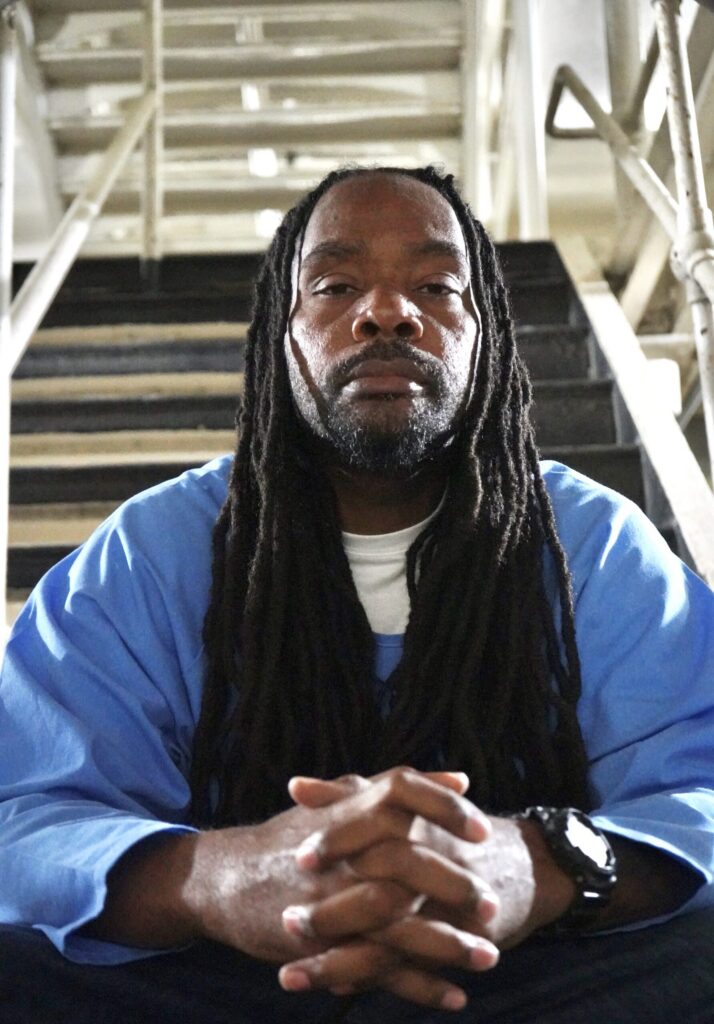
Elliot Singletary’s Surrender Story
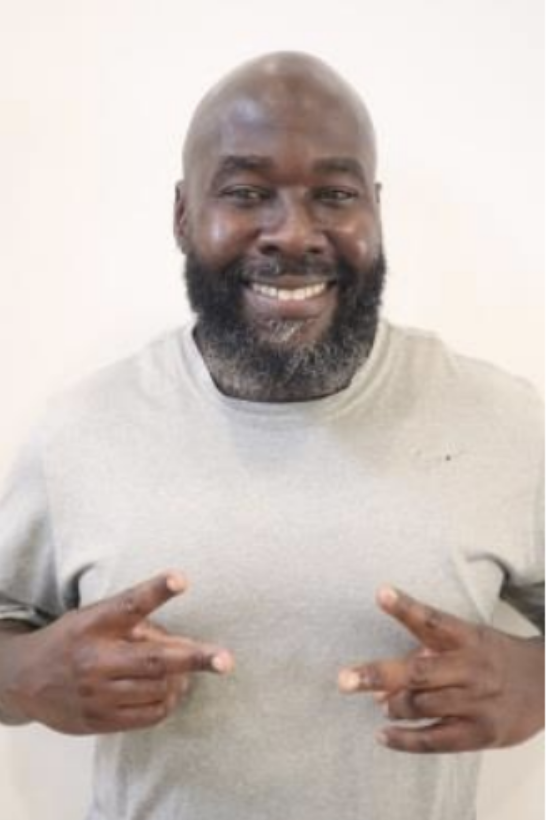
This article was originally published in Mule Creek Post out of Mule Creek State Prison. It won third place for Best Short-Form Feature in the 2026 American Penal Press Contest.
Elliot Singletary is busy trying to get tickets to a Valkyries basketball game for himself and his family. The game is slated for a couple days after his upcoming release. He’s looking forward to showing them a good time. “They love watching basketball and I hope that the Valkyries win,” Elliot states assuredly.
After 30 years of imprisonment, Singletary wants to share what he has learned about winning: “I’ve learned in recovery that surrender is joining the winning side. In rejoining my wife, children, and extended family. Having completely surrendered, I’m rejoining the winning side.”
If you’re reading this and haven’t yet fully surrendered to recovery and rehabilitation, then Elliot has a single word for you: “Obedience. Obedience is the antonym and antithesis to anti-social behavior.”
The true roots of Singletary’s anti-social behaviors were normalized in his childhood. A young Elliot and his brothers formed early on as criminals: “My first actual crime involved me crawling through a doggy door to ‘hang out’ in a friend’s house in seventh grade. Of course, they weren’t home. We ate their Kentucky Fried Chicken and drank their orange juice. Oddly, and for many years following, I truly didn’t view it as a crime. I thought it was funny. I didn’t know what a crime was.”
That ignorance eventually evolved into a murder that he would commit five years later. Then there was the time at age 15 that an angry Elliot took a loaded shotgun to his high school in Van Nuys. To recover, Singletary had to realize that his criminally hardened beliefs and practices — not to follow any rules of civil conduct in his life, had come to define anti-social behavior.
Singletary reminds us that recovery is not an academic discipline. Instead, it is an emotional, psychosocial, and spiritual discipline: “That discipline opened my mind to infinite possibilities. It changed my mindset. To describe it kindly, we live among sick struggling people. I know that intimately because I wasn’t well. I know exactly how well I wasn’t. There were clear signs of that lack of wellness that I was previously unable to see.”
On this day, Singletary happily celebrates his sobriety from criminality date as Nov. 15, 2011. “That was the date that I left Ad-Seg for the very last time — and the logical process of my release began.” Singletary smiles as he reflects on the 16 years of institutionalized thinking and impulsive, reactive, chaotic, and anti-social behavior that preceded criminal sobriety. “Before fully embracing personal recovery, I relied upon the five pillars of denial: rationalization, justification, blaming, excuse-making, and minimizing. Those pillars were the supporting structure for my antisocial thought and resultant criminality. I had to methodically deconstruct those pillars — come what may.”
The majority of that deconstruction was begun in the rigors of Step 4 of Alcoholics Anonymous. Singletary remembers, “That fearless moral inventory is important, extremely important; it was hugely important in discovering the origins and sustenance of my anti-social and criminal thinking.”
Like most sober men in recovery, Singletary views a thorough and well- maintained inventory as the strong and reliable foundation of his path to recovery. “I can’t emphasize that enough. Untreated addiction, which includes criminality, is triggered by unaddressed and so completely mysterious causation in defective character related to causative factors — factors beyond my awareness or control.”
Today, Singletary’s insides align with his outsides. As he speaks, you can see the inner workings of his recovery process in his facial expressions. “Active addiction is a dangerous way to live. The worst part of it … it may take decades, if you survive, to reach important measures of self-discovery without surrendering to the inventory process, not to mention the harm to others. “
After hearing Singletary’s sworn testimony, California Board of Parole Hearings Commissioner Emily Sheffield described his earliest criminality — embedded in his childhood experience, as “survival crimes.” In her summation she stated, “We are happy to give you a second opportunity in life. Your story is the reason that I got into this line of work.”
Singletary is grateful that his hard-won work in recovery was recognized. “If I wouldn’t have gained insight about my childhood, I would not be a free man today. By doing the difficult and uncomfortable work, I placed myself in a window where I could no longer be deemed an unreasonable risk of danger to society.”