The School of Journalism and Advertising at Southern Illinois University (SIU), Carbondale, is proud to partner with the Pollen Initiative to relaunch the historic American Penal Press Contest (APPC).
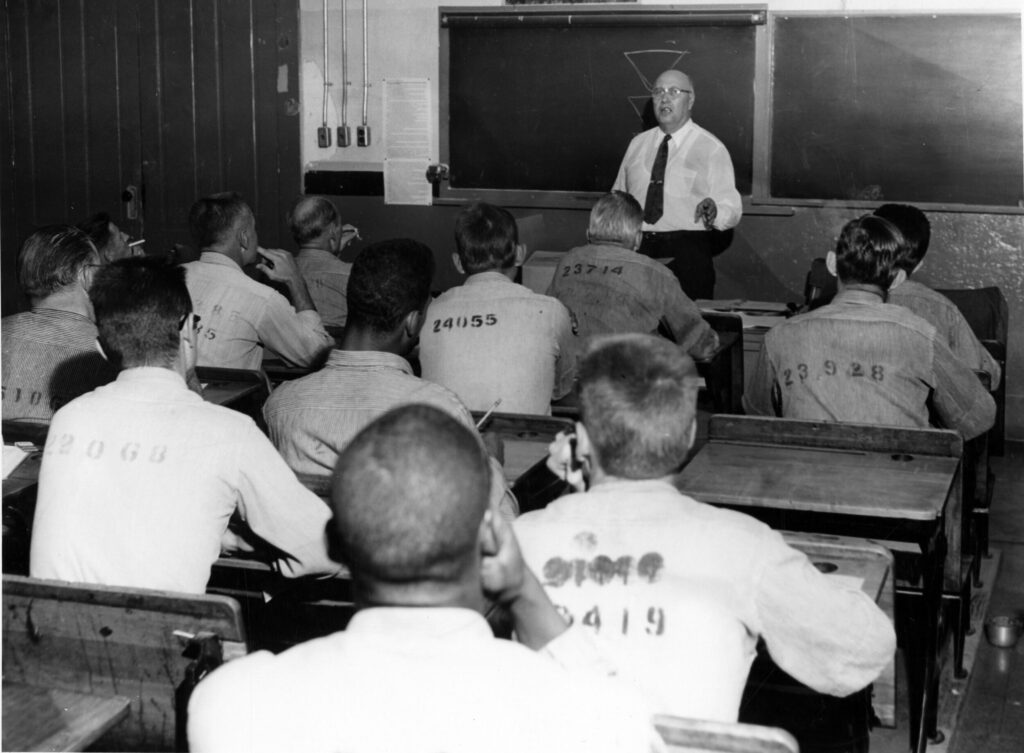
Faculty from SIU’s journalism school created the contest in 1965 and ran it with success until 1990. I came on as a professor and the director of the School of Journalism & Advertising in 2020. But before Jesse Vasquez reached out about the relaunch, I had never heard of the contest. It had been too long; no one here at the university remembered it. After the call, I went looking in the archives and found a handful of file folders, enough to get an idea of what it had been, and what it could be.
The contest resonated with me for a few reasons. Our university is located in a rural area surrounded by the poorest counties of Illinois. One of the main economic engines down here is the prisons. Because of our location, the university has always strived to make an impact beyond our walls and our region. When the contest first started, the founding group of faculty could see that it was important to go to what is now known as the Menard Correctional Center to train these men in journalism, and eventually to give prison newspapers across the country a bigger platform through the APPC.
The contest, then and now, offers incarcerated individuals an opportunity to be seen, heard, and understood beyond the confines of their sentence. It represents the essence of what our mantra is as journalists: to give people who are unheard a voice.
The prison press is a critical outlet for incarcerated individuals to voice their stories, express their views, and challenge the narratives imposed upon them by the broader public. In doing so, it plays a vital role in shining a light on the injustices within the criminal justice system, while also helping to humanize those who are often dehumanized.
The contest resonated with me on a personal level, too. My father had been a prisoner of war under Imperial Japan. Those wounds are invisible — the loss of freedom, the need to cope to be able to survive. One of the lessons I learned from my father is: you try to find things within yourself to be able to move forward.
Prison journalism can play a part in this process, too. Journalism allows incarcerated individuals to reflect on their experiences and actions and to foster critical thinking and empathy. Prison journalists explore not just their own lives but those lived by their fellow prisoners, incarcerated inside walls that can be mental as much as physical. Each piece expresses what makes them human.
With this contest’s relaunch, we’re continuing in the spirit of the creator, Charles C. Clayton. We hope to replicate the impact the original team made. We’ve had to start almost from scratch, but there are more digital and technical resources available to us today that will make this returned contest stronger and more inclusive.
Through our collective efforts — contest organizers and participants — we can challenge the public to see beyond the bars and recognize the dignity and potential in every human being, no matter who or where they are.
— Professor Jan Thompson, Director of the School of Journalism & Advertising at Southern Illinois University, Carbondale