
Sixty years ago this past March, careful readers of The New York Times (NYT) may have caught a tiny news brief nestled inside their paper, announcing the launch of a new journalism competition.
The American Penal Press Contest — it reported — would be an annual event for prison newspapers, organized by the journalism department at Southern Illinois University, Carbondale (SIU) and directed by professor Charles C. Clayton.
And indeed, the contest continued as described. From 1965 to 1990, it honored prison publications for individual stories across several journalistic categories, from the news and feature story to the editorial. It included awards for best newspaper, best magazine and best mimeographed publication. During its strongest years, in the 1980s, the contest drew more than 1,000 submissions per year.
But what made this contest newsworthy in 1965, for esteemed NYT readers?
The curious nature of the potential competitors, we imagine, probably had something to do with it. At the time of the announcement, the prison press had been around for more than a hundred years. In the mid-1960s, around half of U.S. correctional institutions had a publication. That’s according to Ohio University journalism professor Russell N. Baird, author of the first book-length study on prison journalism, “The Penal Press,” published in 1967. Baird placed the total number of publications at 222, a breathtaking sum by today’s standards.
Still, the broader public knew little about their work, despite regular efforts from prison editors to draw reader interest from beyond the walls. James Fixx made this point directly in a 1963 article for the Saturday Review, in which he sang the praises of the prison press as some of the “liveliest … publications that ever fractured a stereotype.”
“This corner of the Fourth Estate is largely unknown to the very audience it is most anxious to reach,” Fixx wrote, “the ordinary person with a reasonable concern for the problems of his society.”
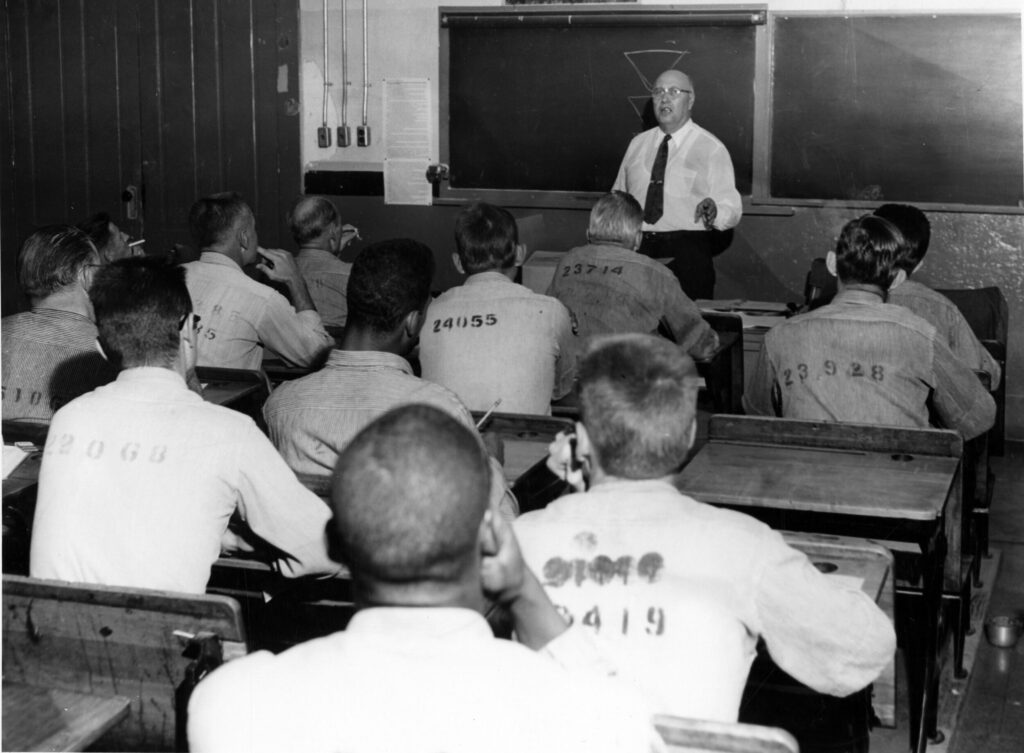
Whether attracting the attention of ordinary readers was a primary motive for the contest’s launch is hard to say. We haven’t yet found documentation that spells out why Clayton created the APPC. What we do know — thanks to an earlier NYT article — is that SIU had been offering a for-credit college journalism course at a nearby prison, the Illinois State Penitentiary, since 1958. The class supported one of the most acclaimed prison newspapers of the day, Menard Time.
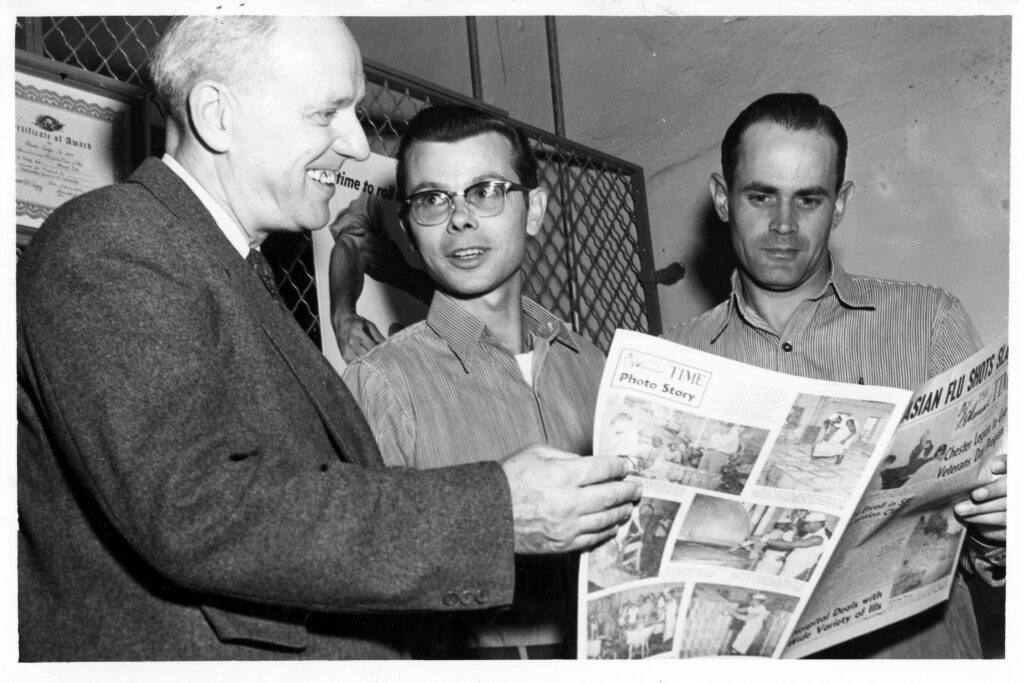
Prison editors have been more vocal about the contest’s achievements. From Reveal Digital’s online collection “American Prison Newspapers,” we can see that competing publications boasted about their victories and offered congratulations to winners from other facilities. One regular contest submitter, Jay Butler, editor of Wyoming’s Best Scene, described how rare it was to have work constructively criticized in a 1968 column. “The American Penal Press Contest offers prison writers this opportunity,” he wrote.
“[T]he contest validated the efforts of mostly self-taught writers,” former editor Wilbert Rideau explained in The Nation in 2014. Rideau, the U.S.’s most decorated prison journalist, edited Louisiana State Penitentiary’s magazine, The Angolite, for more than 20 years starting in the mid-1970s.
“[The contest also] brought new awareness of prison issues to the outside world at a time when the public still viewed prisoners as redeemable and prisons as places not only for punishment but also for rehabilitation,” Rideau wrote.
Robert Taliaferro, who serves on the APPC advisory board, told us in a recent interview about the role of the contest in creating a “golden age of prison journalism.” Taliaferro was editor of The Prison Mirror during the award-winning years 1985 to 1989.
“After we won that first award, all of a sudden, external journalists were interested in what we did,” Taliaferro said. “These folks looked at us like we were human beings that ran around with tails — all that because we were in prison, so we [couldn’t] know any better. So my expectations for… my publication, and prison journalism as a whole, was to make sure that we weren’t going to be looked at as second-class citizens and second-class journalists.”
For a few strong years, Taliaferro stayed in touch with outside and inside journalists all over the country. Articles about The Prison Mirror’s success ran in places like Time magazine and — yes — the NYT.
But this golden era of prison journalism did not survive the rise of mass incarceration. Starting in the late 1980s, law-and-order policies and prison populations ballooned. Prison newsrooms lost both funding and moral support and began to shutter. SIU was undergoing changes, too.
In 1988, Clayton died and Professor Manion Rice, the award coordinator from 1967 to 1988, retired. Professor Walter Jaehnig, then the new department head, kept the program going despite compounding challenges for three more years, holding out for a lifeline from the American Society of News Editors (ASNE). In a press release from the contest’s final year, Jaehnig wrote he “hopes members of the working press will continue to coach prison journalists, who usually learn their craft informally.” Despite an ASNE visit to the now-called Menard Correctional Center in November 1989 to explore a possible relationship, their incoming leadership decided to prioritize other endeavors and passed on the opportunity to take over the contest’s administration.
By the time James McGrath Morris’s book “Jailhouse Journalism” appeared in 1997, the contest had been gone for years. Only a few publications were still in print. Unsurprisingly, Morris was tempted to speculate in his epilogue that “the age of the penal press may be coming to an end.” It was a somber close to an important history.
Thankfully, that’s not the end of the story. Over the last 20 years, legacy publications like San Quentin News have come back to life. And new publications have been born, including many of the big winners in this year’s contest. When Pollen Initiative started conversations about rebooting the APPC with SIU in February 2023, we were confident that enough publications existed to justify bringing the contest back to life. When we solicited submissions in the spring of 2025, 21 papers threw their hats into the ring, sending a total of 179 submissions. Amazingly, 12 of them qualified to compete in the Best Debut Publication category, which was open this year to any journalistic outlet founded post-pandemic.
Today, we know of 37 publications currently operating in 16 states (see map on page 4), though we’re sure there are more we have yet to discover, or verify that they are still operating. As we move into the rebooted contest’s second year, we’re looking to see the number of publications inch ever closer to the prison press’s mid-century glory — and perhaps once again catch the interest of a broad readership like the NYT.


